
Markets & Industries
Telecom & Datacom


Typical Applications
- Next-gen modulators (EO, thin-film)
- PIC devices
- Co-packaged optics (CPO) & high-density/high-power interconnects
- Passive components & micro-optics
- Multi- / hollow-core fibers
- Datacom laser sources (DFB, VCSEL, tunable)
- Frequency combs (spectral & spatial expansion)
- QKD & distributed sensing co-/counter-propagating with data
- Datacenter optical infrastructure qualification & diagnostics
- Datacenter distributed temperature sensing
- And more +++
Challenges
- More bandwidth requirements driven mainly by AI (spectral & spatial expansion, signal complexity & speed) while reaching the limits of the optical fiber technology used in the last 20 years — and with increased sensitivity to power consumption. The pressure from these simultaneous constraints is pushing component and system performance into territory where tolerances are tighter and tradeoffs are harder.
- New requirements related to copropagation and counterpropagation of signals such as QKD and distributed sensing introduce crosstalk and Raman-induced impairments that directly affect BER and quantum channel integrity — and that must be understood at the source level.
- High-volume production testing with higher performance requirements and combined constraints — speed, repeatability, and dynamic range are no longer independently negotiable.
Needs
The telecom and datacom industry needs to move faster on more fronts simultaneously — developing and qualifying novel technologies while scaling up production without sacrificing measurement integrity. More specifically, this means instrumentation capable of supporting the full development cycle of next-gen modulators, photonic integrated circuits, advanced micro-optics, co-packaged optics, high-density/power interconnects, multi/hollow-core fibers, and more.
Solutions
- Optical Spectrum Analyzers (OSA), Optical Complex Spectrum Analyzers (OCSA) and Optical Frequency-Domain Reflectometers (OFDR) bring high performance and versatility to your R&D lab for exhaustive characterization and benchmarking — including OSNR monitoring, spectral analysis, and high-resolution loss and reflectometry.
- Optical Multitest Platforms brings speed, automation and robustness for scalable and repeatable test strategies.
Aerospace & Defense

Typical Applications
- RF/MW photonics & secure comms
- Antenna / signal synchronization — frequency combs
- Atomic / optical clocks, cold-atom (GNSS-free nav)
- High-power fiber lasers / directed energy
- Coherent / FMCW lidar
- Satellite / airframe distributed strain & temperature
- And more +++
Challenges
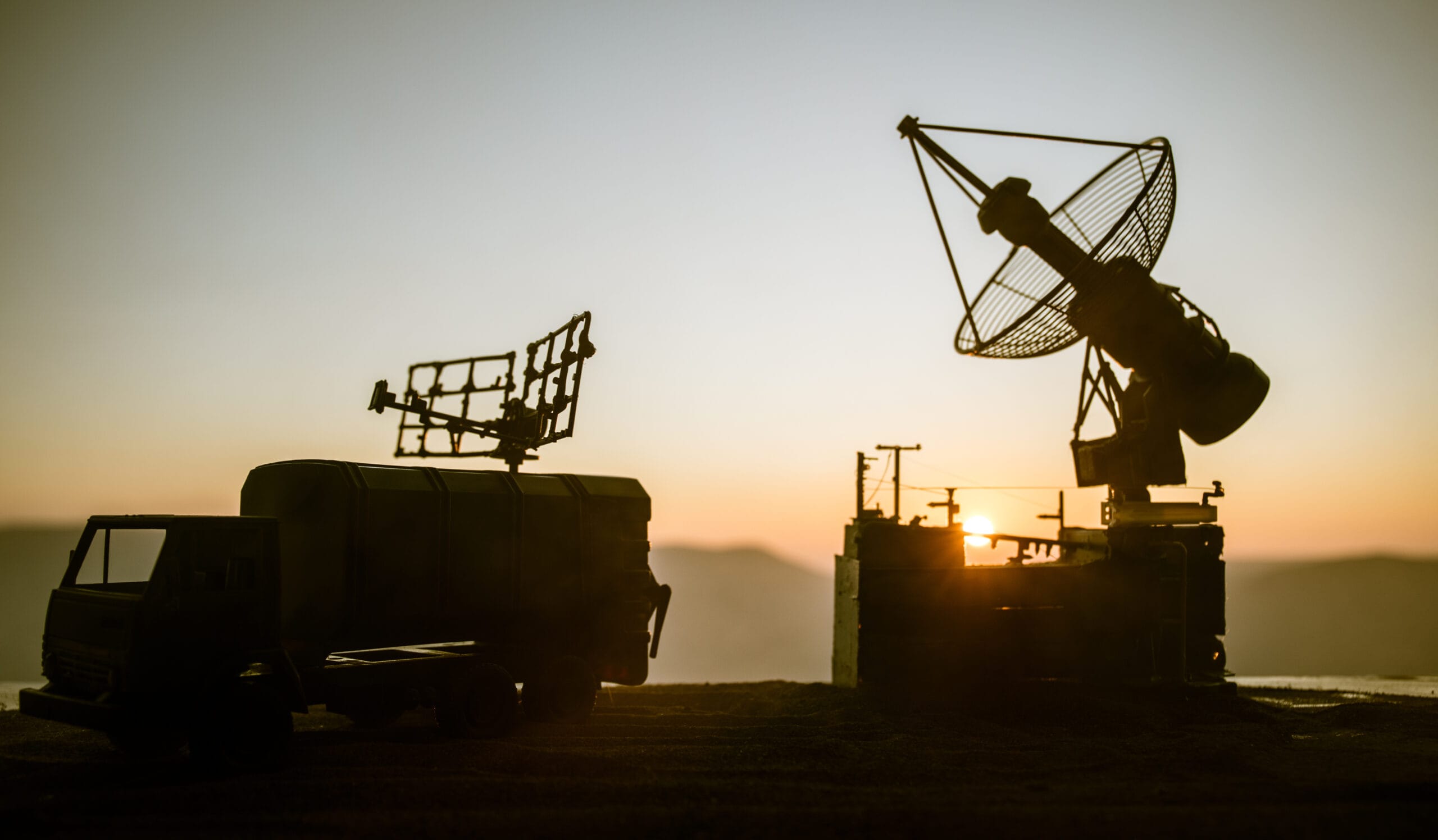
Radar, electronic warfare and secure communications increasingly rely on RF/microwave/THz photonics, where the signal is carried, generated or processed in the optical domain (electro-optic modulation, two-laser heterodyne generation) — moving the critical measurements onto the optical carrier, its modulation sidebands and its spectral purity and raising the bar on resolution and dynamic range beyond what general-purpose instrumentation can cover.
Mission-critical sensing and timing are turning to optical methods: distributed strain and temperature monitoring along satellite structures and airframes, frequency-comb and atomic-clock synchronization, and photonics-based inertial navigation — each with precision requirements that leave very little margin.
High-power fiber lasers for directed energy, coherent and ToF lidar, and emerging THz sources require tight characterization of spectral content, coherence and losses — where measurement resolution and dynamic range set the performance ceiling.
Needs
Aerospace and defense programs operate at the intersection of optical precision and mission criticality — where characterization and qualification of optical subsystems must match the rigor of the systems they enable. Instrumentation must keep pace with the optical complexity of modern systems using technologies such as electro-optic modulators, distributed fiber sensors, frequency combs and optical references, RF/microwave photonic links, tunable laser sources, high-power fiber lasers, and more.
Solutions
- Optical Spectrum Analyzers (OSA) and Optical Complex Spectrum Analyzers (OCSA) bring high-resolution spectral and complex (amplitude + phase) characterization of lasers, modulators, frequency combs and the optical tones behind RF-photonic and THz generation, and 850 nm ToF lidar.
- Optical Frequency-Domain Reflectometers (OFDR) delivers distributed strain/temperature sensing along satellite structures and airframe subsystems, plus high-resolution loss and reflectometry on fiber assemblies.
- Tunable Laser Sources (TLS) provides tunable, multi-band laser sourcing for component characterization and as stimulus in coherent, lidar and atomic/quantum subsystems.
- ASE Broadband Sources provides a stable, broadband source for interrogating FBG arrays and characterizing passive optical subsystems.
- Polarimeters characterizes polarization behavior (PER, DOP, PDL) of modulators, coherent links and polarization-sensitive components.
Energy


Typical Applications
- Nuclear fusion — pump laser qualification and optical assembly diagnostics
- Distributed thermal gradient mapping — battery packs, power transformers, electric motors, heat exchangers
- Nuclear fission — containment and civil structure monitoring
- Composite/structural monitoring — towers, pylons, civil structures
- Offshore wind turbine structural health monitoring
- FBG-array interrogation networks (structural, thermal, subsea power cables)
- And more +++
Challenges
- Structural monitoring of energy infrastructure — offshore wind farms, civil structures, and nuclear facilities — demands distributed, high-spatial-resolution sensing over assemblies that carry significant mechanical loads and thermal gradients over their service life. Point sensors fall short; embedding fiber is increasingly the answer, but interrogating it precisely is the hard part.
- Thermal management has become a design constraint in its own right: battery packs, power transformers, electric motors, and heat exchangers all generate thermal gradients that affect performance, safety, and lifetime — and that traditional spot measurements miss entirely.
- Energy research — particularly inertial-confinement fusion — places extreme demands on the optical systems involved: pump laser sources must be tightly characterized, beam delivery assemblies must be free of unexpected losses or reflections, and the margin for error is essentially zero.
Needs
The energy sector needs reliable ways to develop, qualify, and monitor the optical systems and sensing networks that underpin modern energy infrastructure and research. More specifically, this means instrumentation that can address the full stack — from individual components and assemblies to complete sensing modules and deployed systems — with the precision and spatial resolution these environments demand.
Solutions
- Optical Frequency-Domain Reflectometers (OFDR) delivers high-spatial-resolution distributed strain and temperature sensing along structural elements and fiber assemblies, as well as precise loss and reflectometry — from embedded sensing fiber in wind turbines to optical harnesses in research installations.
- ASE Broadband Sources serves as a stable broadband source for interrogating FBG arrays embedded in structural health monitoring networks across energy infrastructure.
- Optical Spectrum Analyzers (OSA) and Optical Complex Spectrum Analyzers (OCSA) characterize the spectral content, coherence, and performance of laser sources used in energy research — from pump laser qualification to beam delivery verification.
- Tunable Laser Sources (TLS) provides a tunable, highly coherent source for optical component and assembly characterization across the energy sector.
Academic Research
Typical Applications
- Quantum photonics (computing, sensing, communication)
- Non-linear optics
- Integrated photonics — novel materials & functions
- Ultrafast science & frequency combs
- Precision metrology / optical clocks
- High-resolution spectroscopy
- Fiber & component research (specialty fibers, FBGs, passive devices)
- And more +++
Challenges
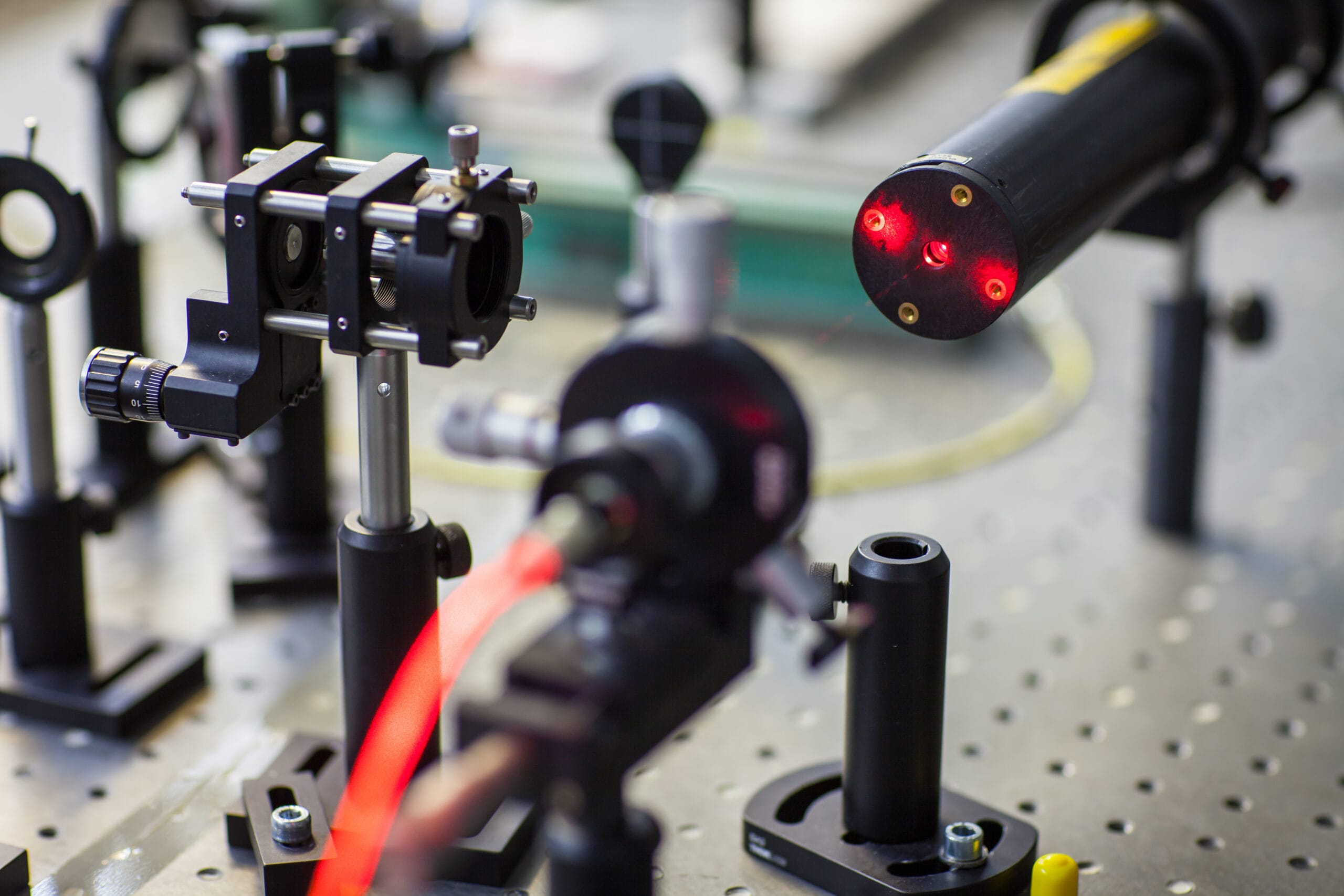
- Research labs live at the frontier — frequently the first to push instrumentation toward the edge of its specifications, across domains where established tools cover much of the need but not all of it. The result is constant pressure to extract more resolution, more dynamic range, and more versatility from each instrument, while producing data rigorous enough to withstand peer review.
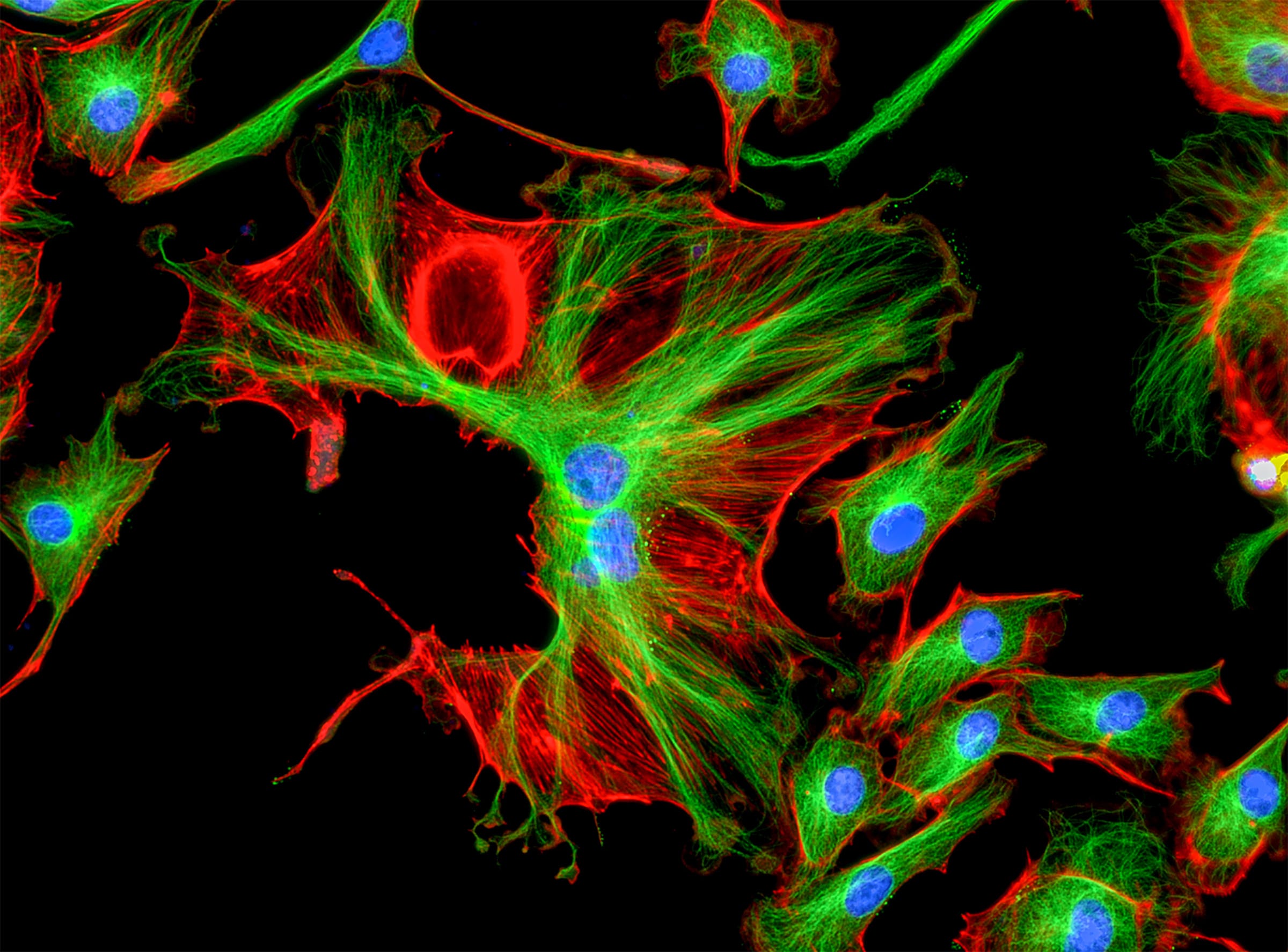
- Frontier domains compound this: quantum physics (computing, sensing, communication), non-linear optics, novel materials and functions for integrated photonics, ultrafast science, and precision metrology each place distinct and demanding requirements on optical characterization — often simultaneously, within the same lab and sometimes the same setup.
- Budgets and lab space rarely stretch to a dedicated instrument per task, so versatile, multi-purpose tools that perform credibly across several research axes carry real weight.
Needs
Academic and research environments — public and private alike — need high-performance instrumentation flexible enough to serve several research directions without compromising on precision. More specifically, this means tools capable of characterizing lasers, optical sources, components, and fiber assemblies across a broad spectral and functional range, with the resolution and fidelity that frontier research and publication demand.
Solutions
- Optical Spectrum Analyzers (OSA) and Optical Complex Spectrum Analyzers (OCSA) deliver high-resolution spectral and complex (amplitude + phase) characterization of lasers, frequency combs, non-linear and integrated-photonic devices — including the spectral purity and linewidth measurements central to quantum and metrology work.
- Tunable Laser Sources (TLS) provides a tunable, highly coherent, multi-band source for component characterization and as stimulus across quantum, non-linear, and integrated-photonics experiments.
- Optical Frequency-Domain Reflectometers (OFDR) brings high-resolution loss and reflectometry for characterizing fiber assemblies and integrated-photonic structures, plus distributed sensing for experimental setups.
- ASE Broadband Sources serves as a stable broadband source for component characterization and FBG interrogation.
- Polarimeters characterizes polarization behavior (SOP, DOP, PER, PDL) of sources, components, and polarization-sensitive experiments.



Copyright © 2026 Apex Technologies