
Product Update
Optical Spectrum Analyzer – 850 nm
June 2026
ABSTRACT Spectral characterization around 850 nm is essential in many photonics applications including VCSEL development for short-reach optical communications, sensing systems, biomedical instrumentation, and emerging quantum photonics technologies. Unlike conventional diffraction-grating-based OSAs, APEX Technologies optical spectrum analyzers rely on an interferometric measurement principle that delivers resolution and dynamic range performance far beyond what grating instruments can achieve. This technical note presents the measurement capabilities of the OSA-APB-850, a high-resolution Optical Spectrum Analyzer dedicated to the 844–860 nm wavelength range and demonstrates its ability to resolve fine spectral structures with excellent wavelength precision and dynamic range. |
1. Interferometric OSA Technology
The OSA-APB-850 uses a coherent heterodyne detection scheme. An internal Tunable Laser Source (TLS) serves as the Local Oscillator (LO) and sweeps continuously across the 844–860 nm band. The LO signal is optically mixed with the Signal Under Test (SUT) at the input coupler, and the resulting beat signal is processed by a bank of calibrated RF filters.
The narrowest RF filter with a bandwidth of 5 MHz directly determines the instrument's optical resolution of 0.01 pm. This approach fundamentally decouples resolution from the physical constraints of diffraction optics, enabling measurements at the sub-pm scale with a large input power range and an exceptional close-in dynamic range.
Key differentiators vs. Grating-Based OSA:
Traditional OSAs based on diffraction gratings are limited by their physical optics, typical resolution is 0.02 nm (20 pm), orders of magnitude coarser than the OSA-APB-850 which can reach a 2000 times better resolution of 0.01pm.
2. Target Applications
The OSA-APB-850 is designed for R&D engineers and researchers working in photonics, quantum technologies, and optical sensing. Its unique combination of 5 MHz resolution, 70 dB dynamic range, and ±2 pm absolute wavelength accuracy makes it the instrument of choice in the following fields:
| Application | Description |
| VCSEL Characterization | 850 nm VCSELs are the primary light source for short-reach optical interconnects in AI/HPC data centers. Recent demonstrations include 200 Gbps/lane PAM4 and 112 Gbps/lane NRZ transmission using a VCSEL with 41 GHz 3‑dB bandwidth and RIN < −150 dB/Hz, targeting the 1.6T/3.2T Ethernet standards required by next-generation AI computing clusters [1]. Advanced integration approaches, such as laterally integrated VCSEL–EAM transmitters using slow-light coupling, further extend modulation bandwidth beyond direct-current limits for next-generation interconnects [2] . In both cases, precise spectral characterization, mode-hop detection, SMSR, RIN, and linewidth, requires the sub-pm resolution and 70 dB dynamic range of the OSA 850 nm. |
| Quantum Sensors & Atomic Magnetometry | Faraday lasers locked to the Cs D2 transition at 852 nm achieve wavelength stability within ±2 pm over 48 hours using a Cs Faraday optical filter as the frequency-selecting element [3]. This level of stability is comparable to the wavelength accuracy of the OSA 850 nm itself, making the instrument well suited for verifying and qualifying such ultra-stable Cs-locked sources used in atomic clocks, magnetometers, and quantum memory experiments. |
| Short-Range ToF LIDAR | The 850 nm band is widely used for short-range time-of-flight (ToF) LIDAR and 3D sensing in autonomous vehicles and robotics, owing to its lower atmospheric water vapor absorption compared to longer wavelengths and the higher sensitivity of silicon-based detectors at this wavelength [4] . VCSEL and edge-emitting laser sources used as ToF illuminators must be tightly controlled in wavelength and spectral purity to ensure reliable distance measurement and minimize cross-talk between sensors [5] . The sub-pm resolution and 70 dB dynamic range of the OSA 850 nm enable precise spectral qualification of these ToF laser sources during R&D and production testing. |
| Ultra-Narrow Filter Characterization | Resonant ultra-narrow-bandwidth nonlinear optical filters based on the Cs 6S1/2→6P3/2 transition at 852 nm have demonstrated bandwidths below 60 MHz, two orders of magnitude narrower than conventional Faraday anomalous dispersion filters — with applications in frequency-stabilized lasers, atomic clocks, and free-space optical communication [6] . With a close-in dynamic range exceeding 70 dB at ±6 pm offset, the OSA 850 nm resolves the stop-band rejection and characterizes the spectral response of such ultra-narrow filters, etalons, and fiber Bragg gratings, enabling measurements that traditional grating-based OSAs cannot perform at this wavelength. |
| Atomic Vapor Cells & Quantum Photonics | Photonic integrated circuits (PICs) co-packaged with atomic vapor cells are an emerging platform for miniaturized quantum sensors and optical frequency references. Near 852 nm, Cs vapor cells are used for EIT spectroscopy and Faraday-filter laser locking [3]. Rubidium-based optical tweezers operating at 850 nm have been demonstrated for dual-species quantum computing and simulation experiments [7]. The OSA 850 nm enables accurate wavelength verification and spectral purity assessment for these hybrids photonic–atomic systems. |
3. Measurement Examples
The following spectra were acquired with the OSA-APB-850 on single-frequency laser sources at three representative wavelengths within the 844–860 nm band. They illustrate the instrument's ability to resolve fine spectral features with high signal-to-noise ratio across the full operating range.
3.1 Single frequency laser at 845 nm
Resolution: 1.12 pm. The spectrum shows a single narrow peak with a noise floor around -40dBm, demonstrating the instrument's ability to resolve sub-pm linewidth features at the low end of the operating range.
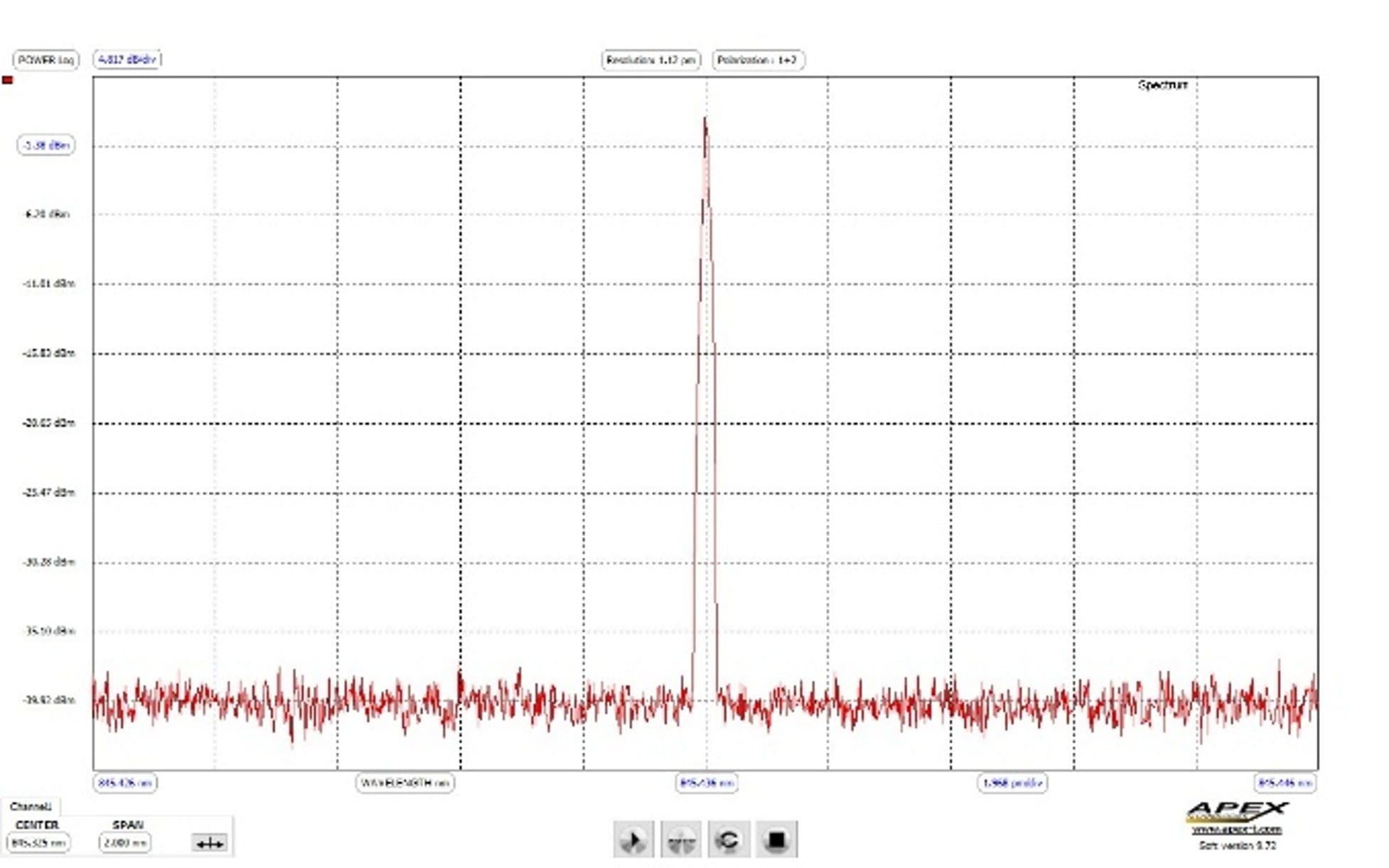
Figure 1 - optical Spectrum of a single-frequency laser at ~845 nm
3.2 Single frequency laser at 851 nm
Resolution: 0.04 pm. This measurement near the cesium D2 transition at 852.1 nm highlights the OSA-APB-850's relevance for quantum sensor applications. The instrument resolves the narrow emission line against a low noise background.
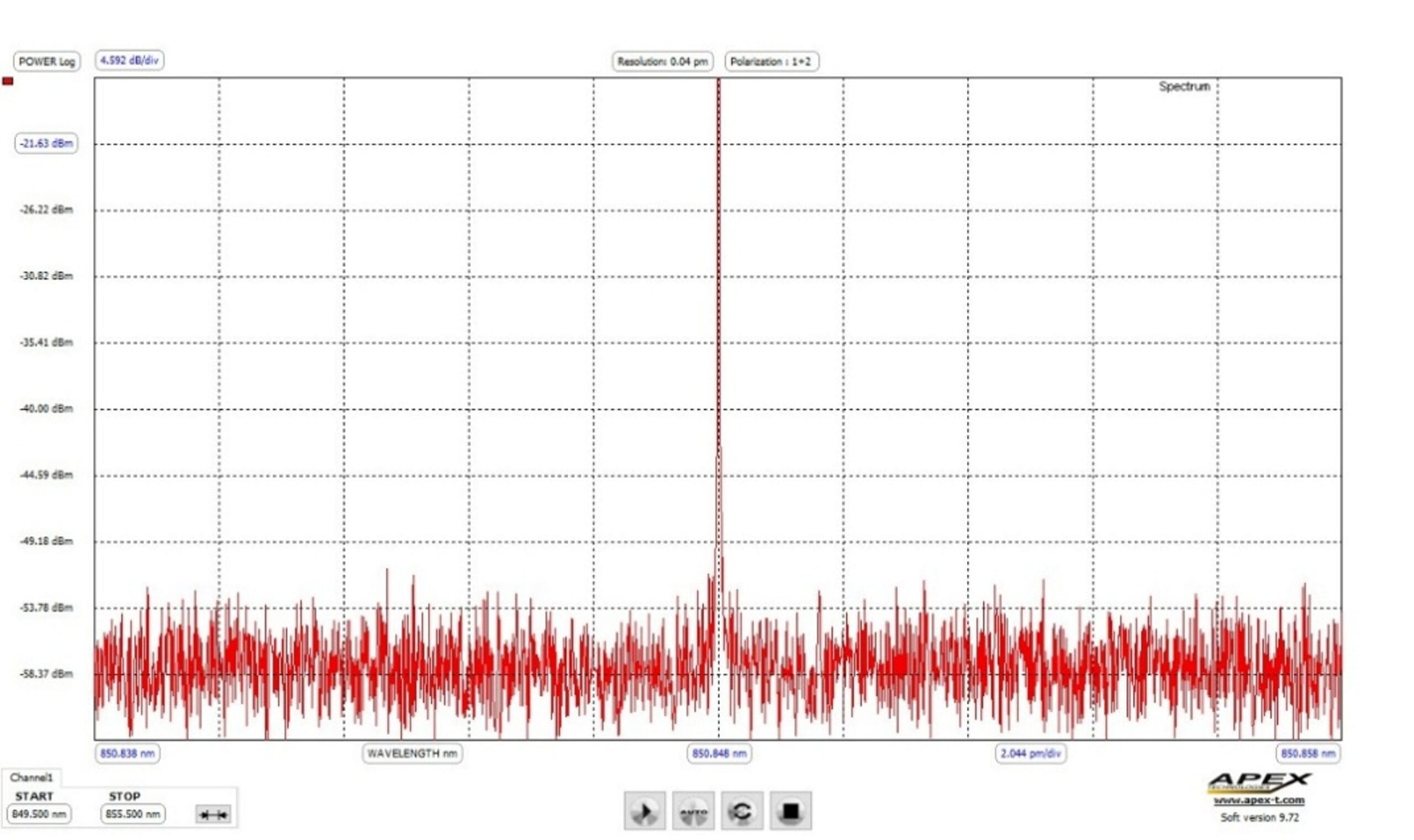
Figure 2 - Optical spectrum of a single-frequency laser at ~851 nm
3.3 Single frequency laser at 860 nm
Resolution: 1.12 pm. The spectrum at the upper end of the operating range shows a strong emission peak at ~1 dBm, confirming flat sensitivity and consistent noise floor performance across the full 844–860 nm band.
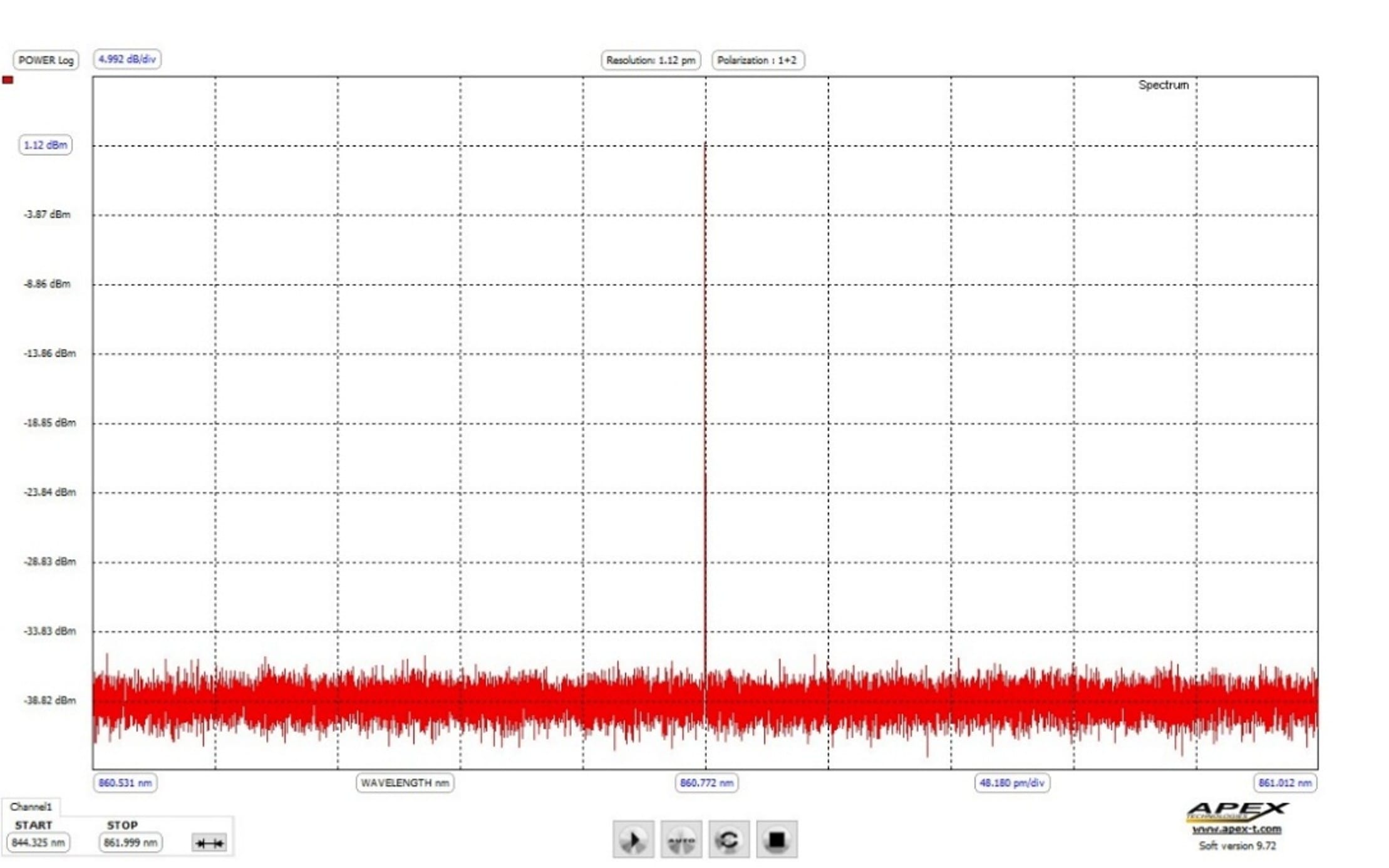
Figure 3 - Optical spectrum of a single-frequency laser at ~860 nm
4. References
[1] Luo et al., “850-nm VCSEL for 112 Gbps NRZ and 200 Gbps PAM4 Optical Interconnects,” Proc. SPIE Photonics West, Vertical-Cavity Surface-Emitting Lasers XXX, Jan. 2026. Available: https://www.berxel.com/dist/PDF/SPIE-PW-2026_submmit_zhiteng.pdf
[2] Jain et al., “A Laterally Integrated VCSEL–Electro-Absorption Modulator Enabled by Resonance Detuning and Slow-Light Coupling,” Photonics, 13(4), 368, Apr. 2026. Available: https://doi.org/10.3390/photonics13040368
[3] Yu et al., “A Faraday laser operating on Cs 852 nm transition,” Appl. Phys. B, 125, 209, 2019. Available: https://link.springer.com/article/10.1007/s00340-019-7342-5
[4] Ouster, “How Multi-Beam Flash Lidar Works,” Technical Insights. Available: https://ouster.com/insights/blog/how-multi-beam-flash-lidar-works
[5] Li et al., “Lidar for Autonomous Driving: The Principles, Challenges, and Trends for Automotive Lidar and Perception Systems,” arXiv:2004.08467, 2020. Available: https://arxiv.org/abs/2004.08467
[6] Liu et al., “Cesium Atom 852 nm Resonant Ultra-Narrow Bandwidth Nonlinear Optical Filter,” Chinese Physics B / Researching, 2024. Available: https://www.researching.cn/articles/OJfc04b2ff62861f82
[7] Wei et al., “Dual-species Optical tweezer for Rb and K atoms,” arXiv:2410.20761, Oct. 2024. Available: https://arxiv.org/abs/2410.20761



Copyright © 2026 Apex Technologies